The record, the official story, and the holes between them.
We read what the institutions wrote at the time, when their own men were digging and nobody was expected to check. We quote it exactly, with the page. Then we ask the only question that matters: where is it now?
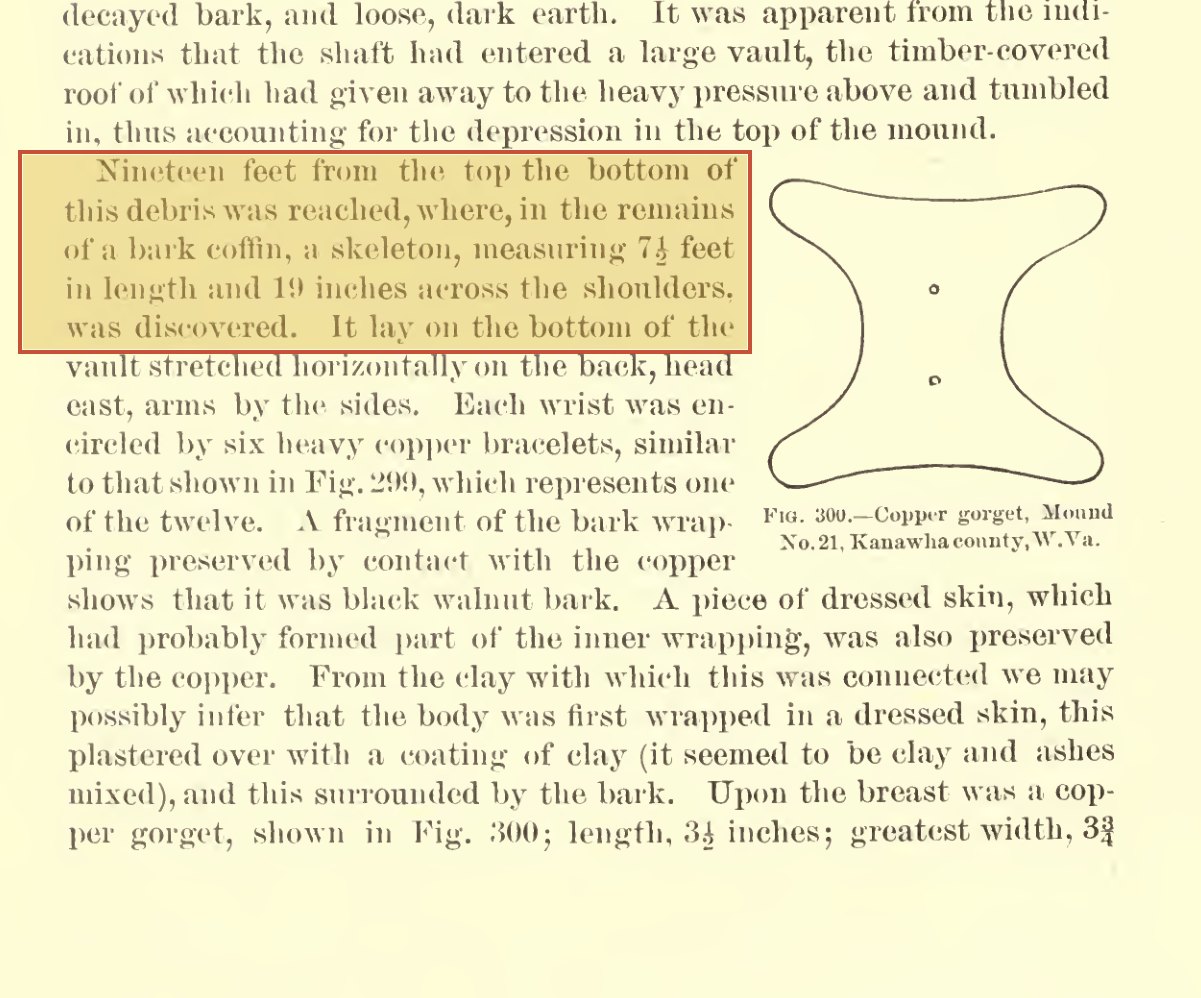 Exhibit 1
The Smithsonian measured a giant. In its own book.
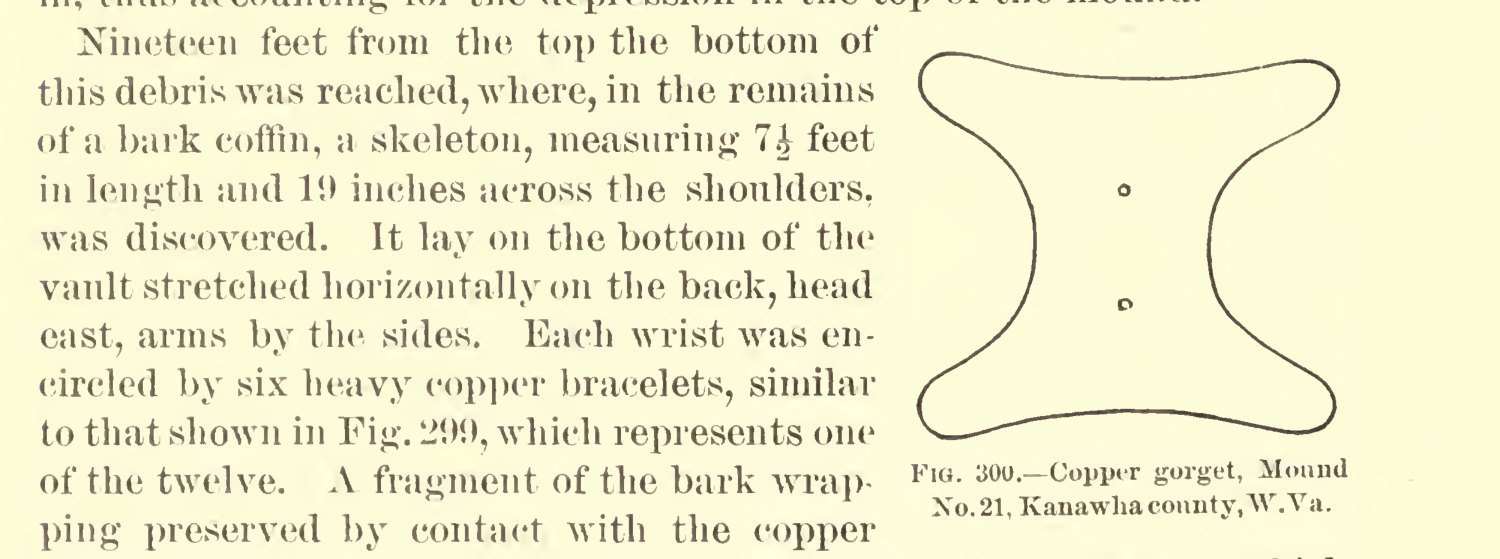
"…in the remains of a bark coffin, a skeleton, measuring 7½ feet in length and 19 inches across the shoulders, was discovered."
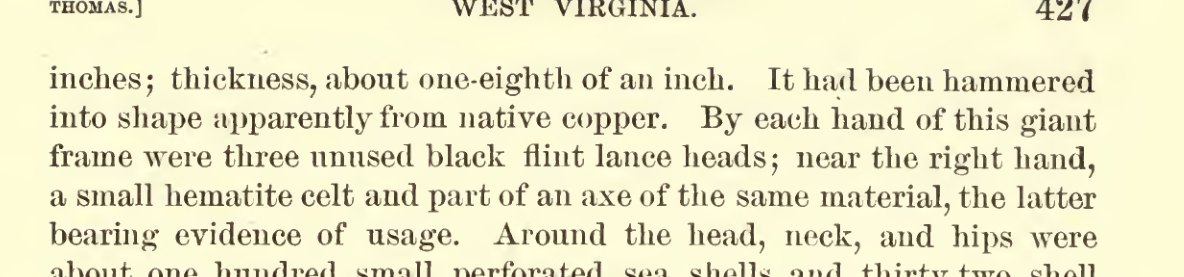
"By each hand of this giant frame were three unused black flint lance heads."
Our reading
Nineteen feet down in a mound thirty-five feet high: a timbered vault, a coffin of black walnut bark, six heavy copper bracelets on each wrist, a copper gorget on the breast, six unused blades laid three by each hand. That is not a mistaken mastodon. It is a funeral, for a man the Smithsonian's own agents measured at seven and a half feet and called a giant.
The same book boasts, on page 22, that its forty thousand specimens are "so carefully marked and numbered that by reference to the catalogue any article can easily be found."
Four rules, every page.
The record
Quoted exactly, with the book, the page and the year. Set apart on the page, so you always know what is a document.
The reading
Our argument, said plainly and with conviction. Never dressed up as a quote, never hidden inside one.
Where is it now?
Every chapter follows the thing it describes until the trail breaks, and writes down where it broke.
Every original, kept
We save a copy of every page we cite, with a checksum, and tell you where to read the public original.
The Giant Frame
Built from the Smithsonian's own mound reports, the newspapers that watched the bones packed and shipped to Washington, the director who had decided the answer before the first spade went in, and the oldest books in the world, which knew these people by name.
- Part one · The RecordPage 426. Forty thousand objects. Packed and forwarded. Measured in the ground.
- Part two · The SuspectThe director had already decided. The gatekeeper. The keepers. The humbug.
- Part three · The RaceThe remnant. "So tall that we reached only to his waist." The cave. The giant frame.
"There is a sentence on page 426 of a government book printed in 1894, and almost nobody has read it."
Get chapter one when it opensOne book for every hole.
The Giant Frame
The giants the Smithsonian measured, and where they went.
Dragon Bones
The first dinosaur bone in print was called a giant's. Then a committee gave it a new name.
The Mask
Person, corporation and the "invisible government," in the law's own words.
The Founding Decades
Who founded the keepers of the record, 1840 to 1913, and who paid.
The First Run
1540 to 1730: the men who built the timeline, and the ten days they deleted.
The Operation
The whole sequence, step by step, with the record kept apart from the reading.
New records, as we file them.
When a page is pulled, a thread is tied or a chapter opens, the list hears first. Chapter one of The Giant Frame goes to the list when it opens.